Showing posts with label We Are Family. Show all posts

Monday, August 7, 2017

Our Non-Genetic Heritage

I spent most of Sunday working on Goran's and my family trees. One thing that struck me is how incredibly important a role foster parents have played in both our families. There are numerous foster parents in both our family trees, but two salient examples illustrate.

During the Spanish influenza epidemic, first my great grandmother and her baby boy passed away, then my great grandfather towards the tail end of the epidemic.
"Uncle Henry" as a young man

During the Great Spanish Influenza Epidemic of 1918-1919 (considered the most devastating epidemic in recorded history: 30-40 million people died), my grandmother lost both her parents and her baby brother Howard. The oldest of her seven surviving siblings were still in their teens and the youngest was 5 years old. The children were all taken in and raised by their life-long bachelor uncle Henry. I have always been in awe of the sacrifice of this man who went from single bachelor farmer to parent of seven over night.

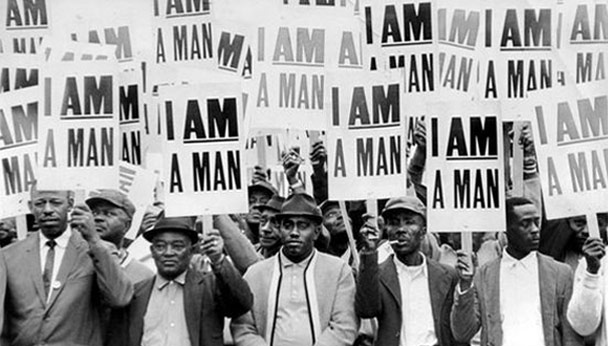
An iconic photo from the 1968 Memphis Sanitation Workers Strike. Martin Luther King, Jr. traveled to Memphis to support the sanitation workers, and it was there he was assassinated.
Otis Elliott and Göran's grandma Eloise

On Goran's side, his father and father's sister Dorothy were raised by Otis Elliott. Aunt Dottie described Otis as a kind and good father who raised them as his own kids, and provided a stable, loving influence in their lives. Like my grandma's uncle Henry, Otis was a humble, hard working man. Otis was a sanitation worker in Memphis, Tennessee during the sanitation workers strike of 1968, a pivotal moment in the Civil Rights Movement. He was always (justifiably) proud of his role in that historic movement for equality and justice that has shaped all of our worlds.

Certainly our genetic heritage is a huge part of making us who we are. But family is much more than just genes ("genealogy"). Individually and as families, we are who we are as well because of the things we inherited spiritually and emotionally and socially from foster parents, mentors or teachers.

Friday, November 6, 2015

Children Think

When I was eleven years old, my dad was a stake missionary, and he would take me with him on his assignments. It was happy times for me. I loved being a missionary with my dad.

We visited a family, a single mom and her kids. Her name was Sister Martinez. She was black. She had a son named David, who was eleven years old, like I was. David was kind of shy, but I immediately liked him and wanted to be his friend.

I was eleven years old, so I was getting ready for priesthood ordination, and the first thing I thought of in relation to David was how important it was for him to get ready to be ordained too. And when I brought that up with my dad, that was when he had to explain to me: David will not get ready to be ordained. He can't be ordained. Because he's black.

There's no reasonable way a father can explain to his son why something like that is the way it is. I was eleven years old, and somehow I still hadn't learned to dislike someone or think they were less than me because their skin was a different color.

Dad couldn't explain it, and he didn't really even try. I was left to try to figure this one out for myself. A tall order for an eleven-year-old, even one getting ready to be ordained a deacon.

That one took me a few years, and a lot more maturity.

So...

Mormon parents now get to explain to their children:

Why that little baby can't be blessed.

Why that eight-year-old child can't be baptized. (Doesn't matter how much she loves the Gospel.)

Why that eleven-year-old boy can't be ordained.

Why that nineteen-year-old young woman can't go on a mission.

I'm sure a lot of people are thinking they won't have to deal with this, because those children aren't going to be seen around church any more. But that's not the way the human heart works. By the logic of 1974 Mormonism, 11-year-old John never should have looked into the beautiful face of 11-year-old David, and wonder why the one should be ordained a deacon and the other not.

We are all interconnected, and the edicts of Handbooks don't change that.

And children do think about these things.

Thursday, October 29, 2015

Of Mormons and Bridges and the World Congress of Families

In June 2012, a group of about 350 Mormons astonished the world by marching in the Salt Lake City LGBT Pride parade under the banner "Mormons Building Bridges." The sum total of their message was "We are Mormon and we love you unconditionally." It was not the most radical of messages, though to those of us in Mormon circles accustomed to a rhetoric about LGBT Pride that made it something akin to the Devil's Christmas, the gesture was revolutionary. It signaled something brand new in the relationship between the Mormon and gay communities.

2012 was a pivotal and contentious year in LGBT politics. Three states were facing ballot initiatives that would have banned same-sex marriage. Previous to that year, no such measure had ever failed. To many in the LGBT community, Mormons Building Bridges was taking the easy road by refusing to comment on or take a stand on the issue of the day: marriage. Some accused MBB of being a propaganda tool of the LDS Church, and of trying to co-opt the gay rights movement. Taking fire from both sides, it took courage for MBB to stand up.

This past week, Mormons Building Bridges did something equally momentous. With the arrival in Salt Lake of the World Congress of Families, notorious for the extreme anti-gay rhetoric of some of its leaders and for its support of extreme anti-gay legislation in Russia and Nigeria (HRC and the Southern Poverty Law Center have labeled WCF a hate group), MBB decided to organize groups of individuals who could attend and be a presence at the conference. Their core message was that the Gospel of Jesus Christ inspired them to stand up for inclusion of LGBT people in our families and in society. They went with the stated intention of engaging in dialog -- both listening for greater understanding, but also sharing their unique perspective on LGBT issues.

Of concern to many was the high profile way in which the Church of Jesus Christ of Latter-day Saints would be participating in the conference. Elder M. Russell Ballard was a featured speaker at the opening plenary, and the Tabernacle Choir was going to perform at the conference. Of course the presence of the conference in Salt Lake meant that large numbers of Latter-day Saints were going to attend and participate.

In the week before the conference, Erika Munson, a member of the MBB community, published an editorial in the Salt Lake Tribune criticizing the "natural family" rhetoric of WCF. MBB members attending WCF wanted to engage in dialog about the ways that "natural family" rhetoric could harm and exclude LGBT people. Showing up at the conference identified by yellow MBB stickers, they wanted to be a visible presence in support of LGBT inclusion.


I was able to be a part of this amazing, tiny band of souls, and what I witnessed was truly amazing. I was one of several LGBT participants in MBB's contingent, including Kendall Wilcox, Berta Marquez, and Samy Galvez. There were not huge numbers of us, but MBB's presence had an impact far out of proportion with our small numbers.

My impression of the conference was that it consisted of a very large number of people with concerns that had nothing at all to do with same-sex marriage or LGBT rights. Many -- perhaps most -- of the conference participants were concerned primarily about things like children growing up in poverty and in single parent homes, divorce (and it's disproportionately negative impact on women), and social ills like drug-abuse and homelessness that are the consequence of failed homes and parental neglect. They were concerned, in other words, about many of the things that I and other members of MBB are concerned about.

The Mormon participation in WCF actually seemed to be a kind of moderate leaven in the mix. The most virulent and hateful anti-gay rhetoric at WCF was coming from non-Mormons like Raphael Cruz (the father of the presidential candidate) and Brian S. Brown, President of the National Organization for Marriage. Elder M. Russell Ballard's opening plenary talk emphasized the importance of compromise (much in the vein of Elder Dallin H. Oaks' address exactly one week previous), diversity and fairness for all, and acknowledged the LDS Church's support for legal protections for LGBT people (he used the term "LGBT"). Notably, Elder Ballard avoided the use of the loaded phrase "natural family." Mormon speaker Wendy Ulrich was applauded by MBB participants for her gender inclusive language. She as well as Linda and Richard Eyring, other LDS speakers at the conference, were appreciated for staying away from same-sex marriage, and focusing on the principles that make for any successful marriage -- principles that all applied as well to same-sex couples as to opposite-sex couples.

MBB members were listening to talks to get a sense of what people's primary concerns were, and were striking up conversations with conference participants that remained friendly and open, even as the conversations occasionally broached areas of disagreement. During the question and answer session of one of the panels, Berta Marquez introduced herself as an LGBT attendee, and invited individuals to come speak to her in person afterwards if they wanted firsthand experience with an actual LGBT person, rather than third party information. Eleven conference participants took her up on her offer. Six exchanged contact information with her, and three set up lunch dates.


MBB members actively participated in the question and answer sessions at panels, especially where an anti-gay message was being promoted. There was at least one instance of an MBB member being subjected to hostile and intimidating behavior by other conference participants. During a question and answer session at a panel, she asked "What advice would you give to parents if their child tells them he's gay?" She was shouted down by some attendees and then after the session was surrounded by people taking photos of her credentials and her MBB sticker. A woman who identified herself as a member of the organizing committee of the WCF asked this MBB member why she was being disruptive, and then began denigrating Mormons Building Bridges. Though the MBB participant tried to leave the conversation politely, this woman continued to harangue her for about half an hour. After this she and a number of other MBB participants were being followed by security who backed off when the MBB women spoke with them, and they realized that they were not being disruptive nor a threat.

Fortunately, there were other WCF participants who came to this MBB participant and apologized for what they perceived as horrendous behavior by the people who had harassed her. Despite this awful incident, it seemed that there were more instances of individuals having positive conversations and making positive connections, including with individuals and groups who expressed a desire to stay in touch and learn more about MBB.

I left WCF with a handful of literature that was passed out to conference participants, which included some fairly innocuous looking material about parenting and principles of a happy marriage, some libertarian political tracts, a copy of the Proclamation on the Family, a magazine with an article critical of Pope Francis for giving "confusing signs" about LGBT issues, and then a couple of really awful homophobic tracts. One was an advertisement for a book that shouted, "GOODBYE Marriage. GOODBYE Mothers & Fathers. GOODBYE Male & Female. In a World gone MAD, Children are in DANGER." Another described ways to identify victims of "the Sexual Revolution," which included "refugees" from "the gay lifestyle." This mix of handouts was pretty exemplary of what I and others witnessed at WCF.

My sense was that there were a lot of people at WCF with whom I and other LGBT rights supporters could dialog. There were many people whose genuine concern was the welfare of children and the promotion of marital stability and happiness, who didn't have a particularly anti-gay ax to grind. To the extent that they were worried about same-sex marriage, it seemed to me that it was because they had a lack of information or because they had only been exposed to lurid rhetoric about the gay lifestyle or fear-mongering about "religious freedom." In light of the language of compromise in Elder Ballard's keynote, it seemed to me that many of those folks might be moved once they realized that promoting stable, loving relationships of same-sex couples was actually part of the solution to the challenges facing families in the 21st century.

My sense was also that there are some hard-core anti-gay activists at WCF who do have an ax to grind, and who have made gay people the scapegoat for everything they think is wrong about the world. NOM President Brian S. Brown and Raphael Cruz were the standard bearers there for that hard-line position. The Mormon Church -- as conservative as it is on this issue -- is clearly not in the same camp with these folks. And I can't help but think that the anti-gay extremists will leave Salt Lake feeling frustrated by the lack of help coming to them from Mormon quarters. I believe that MBB had more in common with all the other Mormons at the conference than any Mormon had with many Fundamentalist Christians there.


MBB made an impression, for good or for ill. We were sought out by media, which gave us a platform to express concerns about "natural family" rhetoric, and to communicate a desire for families, churches and societies fully inclusive of LGBT individuals. We used social media to get our message out to WCF participants (using WCF hashtags as well as our own #StrengthenAllFamilies hashtag). We had powerful one-on-one conversations with like-minded as well as with other-minded. We participated in question and answer sessions to raise concerns whenever an extreme anti-gay agenda was promoted.

It was one thing for Mormons Building Bridges to march in Pride. That took courage, and it certainly was momentous. It was another thing entirely, and took a completely different kind of courage, to go somewhere members felt much less safe, in defense of their gay, lesbian, bi and transgender family and friends. Slow but steady, Mormons Building Bridges will help us win this race.


Thursday, October 23, 2014

How I saw myself as a gay Mormon youth / how others saw me

My mom has Alzheimer's disease. It really became undeniable about two years ago, when I and my siblings gathered with her and my dad to celebrate their 50th wedding anniversary. My brother Mark had put together a beautiful video about my parents' marriage which we watched together as part of the celebration. My mom watched it blankly -- as if she were watching a video about somebody else's life. We could ask her questions about events in her life as recently as a week before, but she couldn't answer them. Mom was happy to be surrounded by family. She still recognizes us, though it's hard for her to communicate. Her language has become a jumble of mostly incomprehensible words (except for phrases like "I love you!" and "I'm so happy to see you!"), making any form of communication but face-to-face expressions of love and affection frustrating. Gradually I have come to accept that from here on out, Mom and I can't really talk about the past or the future any more. I can be with her only in the present.

Ironically, one of Mom's greatest gifts to me has to do with memory. Before I was born, Mom started a scrapbook of stories of significant events in my life, photos, important documents and mementos. She called them "books of remembrance." A few years ago, when Mom was still lucid, she and Dad paid me and Göran a visit at our home in Minneapolis and she presented me with two volumes that she had lovingly kept up to date through some time after I started Grad School. Recently I've begun to read through them, and I'm astonished with the level of detail and thoroughness with which she recorded anecdotes, milestones, and significant events of my life, from infancy to adulthood. (Being a nurse, she also fastidiously kept track of every illness I ever experienced until I graduated from high school!) 

To give some idea of the level of detail, my mom actually periodically took note of the words in my vocabulary as I was learning to speak. My first language was Finnish, and my family's nickname for me growing up was "Jukka." (Mom's journal was kept in Finnish until about 1969.) In one entry from when I was two, Mom wrote, "Jukka's vocabulary at the end of February was isi, äiti, mummi, ukki, vauva, tyttö, poika, tonttu, tähti, pupu, kissa, kau, tiikeri, kala, kotka, kuumaa, ei saa, ei satu, se on, siinä, näin, siellä, vesi, suihkuttaa, kauhea, kukka, kakku, minä, bye, hi, o boy and o dear." (Mostly Finnish, with a few English greetings and exclamations!) Apparently the first time my Mom ever heard me praying out loud, she found me in my bedroom interceding on behalf of "pupuja" (bunnies).

Recently, I decided I wanted to put together a timeline of significant events in my life and in Göran's (my husband's) life. I have a sense of our respective biographies, the major twists, turns and decisions that have made us into who we are today. So I began by simply jotting down a rough outline of the major life milestones and events from memory. This was a good exercise, if only because it demonstrated the limits of unaided memory. There were many things I remembered only vaguely, and important events in my life that I remembered but couldn't remember exactly when they happened.

For instance, I remember being in a major car accident with my mom. In her book of remembrance Mom recorded that it took place on November 6, 1975. "Jukka hit his knee, Joseph got a little bump on his head, I hit my head and elbow. No-one was seriously hurt - but our car was demolished.... It was a terrible experience." It was a terrible experience. I remember weeping when I saw the occupants of the other car being helped out by paramedics, and saw a little girl with blood all over her face. What I hadn't remembered was when the accident had occurred. I would have placed it in 1971 (after I started the fourth grade), but it had actually taken place four years later, shortly after I had been ordained a deacon. I also hadn't remembered that my little brother Joe, an infant at the time, had been in the accident as well.

Going through Mom's books of remembrance, and through my own files and correspondence has not only helped me construct a timeline of my life more accurately, but it has also given me unexpected perspectives on myself, on the kind of person I was. I was apparently a very sensitive kid, with a goofy sense of humor. I was very open with my emotions. Apparently I cried a lot. I also prayed a lot. I was surprised to see how frequently my mother took note of times when I had encountered some hurt or disappointment, and my response to the situation had always been to immediately go to my room and pray. I had long forgotten this part of my growing up, but Mom took note.

Junior high was the time I remember being most difficult growing up. My mom remembered me frequently coming home from school in tears. My internalized self-image from that time of my life was that I was unpopular, not well liked. I pretty much stuck with three very close friends -- Bill McAlister, Ed Kaufman, and Erik Carlson -- without whom I can't imagine how I would have survived junior high.

During that time Mom wrote in her journal, "[Jukka] has courage against his peers and I'm thankful for that." She kept a report that one of my teachers had sent her of "comments [about John] made by his classmates." Here's a few that were typical:
A very serious person whom people need to listen to [to] completely understand.
John is the type of person I wish I had the strength to live. He seems to possess confidence in himself.
John's a pretty bizarre guy. He can be really funny. His parrot jokes used to crack me up. He has very definite and well defined values which he is willing to share with others. At the same time he is open-minded and accepts the way others think.
John is a person who sticks to his morals regardless of any peer pressure. He's intelligent but doesn't make others know it. Being kind and sincere he never hesitates to help another person. Being a Mormon isn't easy with a lot of peer pressure, yet John doesn't let this affect the way he expresses his opinions.
It surprised me to see those comments lovingly preserved in the book of remembrance. I didn't remember being admired; I mostly remembered feeling alone and vulnerable. Even though my parents (and apparently my peers) saw me as religiously devout and self-confident, I didn't feel either.

Around the time that Mom and I were involved in that terrible car crash, I was experiencing the beginnings of a psychic car crash. The onset of puberty was setting the stage for a terrible internal conflict between my religious sense of self -- the self that I projected publicly -- and my sexuality -- which I kept hidden and which became more and more of a crisis for me as time went on.

Mom once reminded me that as soon as the car stopped spinning in the aftermath of that November 1975 car crash, the first thing I thought to do was to pray. Prayer was my first resort in dealing with my sexuality too, though seemingly to no avail. I was praying for help to overcome it, for it to go away. I didn't really get an answer to my prayers until the summer of 1986, after I had given up all hope of "changing," after I had nearly committed suicide, when all I was left with was to confess to God that despite all my efforts, I was gay. It was only then that God spoke to me clearly, giving me guidance about where to go and what to do from there.

I've been thinking a lot lately about the challenges facing LGBT Mormon youth today. The challenges today are so different, and yet also the same. Some aspects of that experience seem to heighten the pressures and raise the stakes in terrifying ways, but in other ways, LGBT Mormon teens have more resources available to them than I could ever have dreamed of. It was helpful to me to read these notes in my Mom's journal, if only to get a sense of perspective about what LGBT Mormon teens are facing today.

Why did it take so long for my prayers to be answered? Why did it take more than a decade of painful struggle? Maybe it is just that there are no shortcuts to maturity and self-understanding. Maybe it is that the process of struggle itself is what refines us. If my fifty-one-year-old self could magically go back in time to my twelve-year-old self and tell him all "the answers," it wouldn't have mattered anyway. It wouldn't have saved me any struggle, because it was not having the answers that would help me, it was finding them.

What could help at that time in my life me was actually what I already had -- though it was hard for me to see it.

I had parents and friends who were trying to tell me about the good they saw in me. They saw a person who trusted God to help him deal with his challenges. They saw a person who was willing to be weird and unique and who was willing to stand for what he believed was right when nobody else was willing to stand with him. They saw a person who was kind and cared for others, and listened to and was considerate of others, even when he disagreed with them.

The challenge was learning to trust God enough to accept answers from him that were not what I was expecting to receive. The challenge was to apply my strong sense of morality to what I was beginning to learn about myself as a young gay man. The challenge was to listen to myself, and show myself the same compassion I tried to show others.

All the strengths that others recognized in me were there to help me sort through things, even though it was difficult for me to recognize them in myself. It just took time.

My advice to LGBT youth today would be simply that I can't offer you answers, because no answer can make sense to you unless you've wrested it for yourself, through whatever struggles and trials lie ahead. But you have strengths in you that you may not be able to see, and you have the ability to find those answers and make them work for you. And in time, you'll be able to use those strengths not only to help yourself, but to help others along the way.

When I came out to my parents, it took them time to wrestle with that information and come to a place of understanding and peace about it. It took Mom much less time than Dad. The weekend I flew out to Boston to meet with my parents and talk to them about it, Mom says she knew I was OK by the time they were taking me back to the airport to return to Minnesota. She told me that the Holy Spirit spoke to her in an audible voice as we were riding in the car to the airport, reassuring her that her son would be OK. Perhaps part of the reason Mom could know this, part of the reason she could receive that assurance, is because she had been writing love letters to me since before I was born. She had been watching me and telling me stories about my strengths and my gifts in a language that only my mother could know. That gift of memory Mom gave me, reminding me of what I have known since childhood, and what she knew that I knew, of God, of the Church and of myself and of my path through life is a gift I'll carry with me for the rest of this life and into the next.

Tuesday, September 9, 2014

Traveling Without My Honey

Traveling without Göran is less complicated.

No need for cab fare, since I don't mind getting up at 3:30 AM in order to walk 1 mile to the train station to catch a train to the airport in time to catch a 6 AM flight. Actually, I like 6 AM flights. They are generally cheaper.

Without Göran, I generally get wherever it is I need to go faster. I like to walk. I walk fast. I walk up escalators. I walk down them. I prefer stairs to elevators. The walk to the train station is actually feasible since I generally can travel with a few changes of underwear, a few T-shirts, toiletries, a couple of books, my scriptures and my suit. Traveling with Göran is sort of like traveling with Downton Abby's Lady Grantham. Guess who gets to be the valise boy! He will not dispute this.

I prefer not to eat when I travel. When I do eat, it's cheap and quick. I don't need a lot of accessories to travel. I don't buy souvenirs. I don't take a lot of pictures. No music needed, no games on my iPhone. No special royal family issues of People magazine. Just a book. Usually a boring history book. I don't need overhead bin space on a plane.

I have been accused of being a monk. I probably would be, literally, if I didn't have a husband.

Life is cheaper and more logistically easy when you are alone.

But life is not just about logistics and cost.

Life is about connection.

I think that is why, when I was on the verge of joining a monastic order, the revelation that came to me was that I needed to be out in the world, and I needed a life partner to walk through the world with.

When I travel with Göran, kids smile and wave at us, because he smiles, because his clothes are colorful, because there are stuffed animals peeking out of his carry-on bags. Women (and men) compliment him on his sense of flair. Really! Walking down the street with him is sort of like accompanying a celebrity. 

Especially since I have been on the executive committee of Affirmation, I travel alone a lot. But wherever I arrive people always ask, Where is your husband? Wherever I go, I disappoint when I am without him.

Traveling with Göran means having encounters. It means going interesting places (like Sweden and New York City and Disneyland!). It means getting sidetracked on the way. It means stopping to smell the roses (and the coffee!).

Traveling with Göran means insisting on experiencing. It means touching the outside of the plane when I board, for good luck. It means insisting on remembering. It means posing for lots of pictures. It means suitcases that were already heavy when we left are even heavier when we return!

Being married to Göran means having lots more family. It means traveling not just to Utah and California, but to Iowa and Memphis... And having visitors from those places. 

When I travel with Göran, I always have someone holding my hand, someone leaning on my shoulder, someone hugging and kissing me, someone reminding me why I travel, reminding me that we travel because of people, because of family, because the world is beautiful, and because it is meant to be experienced. 

Traveling without Göran is lonely. It's good for feeling dramatic and melancholy. But it's not good. 

Traveling without Göran is like traveling to outer space. I'm only truly grounded after I get home. 


Wednesday, February 26, 2014

El don de las lenguas

I've fallen in love.

I have always regretted not studying Spanish in High School. Not that I regret having studied German. German is a beautiful language, and studying it taught me a lot about my own (second) native language, English. (I grew up speaking Finnish in my home.) And I loved my mission in France and in the French-speaking cantons of Switzerland, and I've always loved being fluent in the language of Voltaire and Montesquieu and Victor Hugo. But Spanish is way too important a language for an American not to know it. And so I decided to teach myself Spanish. Eventually, after I'd learned the basics, I took some advanced Spanish courses at the Resource Center for the Americas.
So my Spanish-speaking ability has been lurking there at the back of my brain for a few years. From time to time I would pick up one of the many Spanish language free newspapers you find around town here in Minneapolis. Occasionally when I heard Mexicans talking on the bus, I'd lean over and eavesdrop. (There are lots of Mexicans in the neighborhood where we live in South Minneapolis). But I'd never really put my Spanish to good use... It remained more of a hobby.

But as soon as I learned that a gathering of LGBT Mormons and their family and friends was being organized in Mexico City for February 7-9, 2014, I began to understand why I had studied Spanish all those years back, and I started brushing it up by listening to LDS General Conference talks in Spanish, and reading news on-line in Spanish -- particularly news of interest to the LGBT or Mormon communities or both.  I learned that Spanish-speaking Mormons -- like English-speaking Mormons -- have their own lingo that you might not be able to pick up from standard language texts and vocabulary lists. And so does the Spanish-speaking LGBT community. It took me a while to figure out that "SUD" was the Spanish equivalent of "LDS"! "Santos de los Últimos Dias"! Or that "transgénero" really does work as a translation for "transgender." Or that "SSA" is "attracción hacia el mismo sexo" in Spanish. I actually put together a Spanish gay Mormon glossary that I was studying daily in preparation for our trip. (Göran and I went together.)

The thing about a language is that it does way more than allow you to find your way to and from the train station or order a meal. It unlocks cultures. It enables relationships. Language creates community. And what a community I discovered in Mexico City.

Now I do believe in the gift of tongues. I've experienced something of it. I have been in situations where my ability to comprehend and to communicate has seemed to exceed my natural abilities. And I believe that it can come to us in those moments when understanding serves some higher purpose, if we have faith in it and ask for it. There have been moments now that I'm back in Minneapolis when I've been really tongue-tied in Spanish, and I've thought, "How on earth did I manage in Mexico?"

That time in Mexico City I regard as sacred. It was a time of testimony bearing, of sharing hopes and dreams and expressing faith. I saw brothers and sisters wrestling to understand and come to terms with something that was threatening to overwhelm them. I saw them -- I heard them! I understood them! -- making a journey from fear to hope. And I got to be a part of it. I got to share my testimony too, and have it be understood and received. (Here's a more detailed account of what happened at the conference.)

It was so hard to leave. I have discovered that I love Mexico. I love the culture and the people. I love the warmth and the kindness, the humility and the generosity. I love the openness and inclusiveness. I love the rainbow of colors. I loved the pride and the love I witnessed among Mexicans for their country, which has suffered so much, and accomplished so much against so many odds. I didn't want to leave. Last week when I was in Salt Lake, I was having a conversation with Randall Thacker about what we had experienced in Mexico, and he expressed what I had already been feeling ever since the end of the conference: "I want to live there!" I could see my husband and I living there.

Thank God for Facebook. Instant, miraculous communication with so many of the friends we made down there. I miss them. But I'm so glad to be able to hear from them every day, and to "like" what they're thinking and doing. That will do until we go back.

I'm part of a group on Facebook for Mexican "SUD LGBT." I'm so delighted and inspired by the other members of this group. I'm so honored to be a witness of their lives and testimonies, and for us to be able to work together in an important work of understanding and living and sharing the Gospel through the unique challenges we face.

Before our Sunday morning testimony meeting, I jotted my thoughts down on a piece of paper, in Spanish. I realized that would be better than me trying to stutter through extemporaneously. I'm glad I did, because now I have a written record of what I shared with my brothers and sisters there to keep in my journal. Here's a translation of it into English.

*****

I love Mexico. I love you all. I am so grateful for you, and for this conference, which has been one of the most spiritual conferences I have ever attended. I cannot return to the United States without leaving you with my testimony of the Gospel.
 A little over a year ago I had brain surgery because of a bike accident. Last summer, my dear husband Göran was diagnosed with kidney disease. Also, we have experienced many trials in our families -- with my mother, my sisters and Göran's sisters. But through all this God has sustained and supported us. Also, we have received many blessings from the members of my ward and from members of the Church. For example, several members of the Church have offered to donate one of their kidneys to Göran....
In the Doctrine & Covenants it says that if you have a desire to proclaim the Gospel, you are called to the work. Alejandro was right yesterday when he said that we do not need a calling from the Church. Whether we are excommunicated or whether we have full fellowship in the Church, we are all called to the work of the Lord, if we testify of Him.
I know that God exists and that he is real, because he speaks to me, and because the Holy Spirit testifies of him. I know that Jesus Christ lives and that he is our Savior, and that this Church -- the Church of Jesus Christ of Latter-day Saints -- is his own church. And I know that even though members of the Church do not completely understand homosexuality, I am not afraid, because I have faith in the Lord, and I know that he will guide the Church until the Church's understanding is perfect and the Church is prepared for his Second Coming.
This is my testimony, in the name of Jesus Christ, Amen. 

Saturday, February 22, 2014

Circling the Wagons Revelations


This weekend is already marvelous and it's barely begun.

I arrived in Salt Lake at the end of what was, quite literally, my worst plane trip ever. Minneapolis was struck by a blizzard Thursday night, and by the small hours of Friday morning, despite the faithful snow plows that ever save Minnesota from imminent disaster, the streets had not quite recovered, and de-icing of airplanes at the airport was behind schedule, so my flight was delayed an hour, starting a chain reaction that included a missed connection, more flight delays, and the longest car rental line I've ever experienced at Salt Lake International Airport. The result was a cold, exhausting journey that began at 3:30 a.m. Central Time and didn't end till 2:30 p.m. Mountain time (a twelve hour trip that normally would have taken about five hours). But it was all worth it.

The rest of that long, exhausting but oh-so-satisfying day (which didn't wind to an end until 11:30 p.m. Mountain Time) was spent in conversation with Mormons in high places and low, and all along the spectrum of LGBT or “SSA” (“same-sex attracted”) experience, and all along the spectrum of experience with, connection to and devotion in the Church of Jesus Christ of Latter-day Saints.

Prior to the Circling the Wagons conference, I had looked at the program and saw in prominent places some prominent names of folks I recognized from Evergreen, names that I'd learned somewhat to dread over the years, mostly because of quotes I'd seen attributed to them in the media, or things I'd seen they'd written on the web, or things people had told me about them. I have to admit, the prospect of actually running into these people was intimidating to me, because I assumed that people like that just plain wouldn't like or respect me or respect my journey and the difficult choices I made. But the reality of them was quite different. Very different kinds of conversations than I ever would have expected happened. Curious conversations; people just wanting to get to know each other. Conversations about the importance of autonomy and respect and safety.

The result was I went home with twin feelings of euphoria and skepticism. Euphoria that the impossible really seemed to be happening, and skepticism that what seemed to be happening actually was happening, or maybe that if it actually was happening that it couldn't possibly last outside of the rather artificial confines of a 2-day conference. I had come to the conference with some misgivings about the utility of the exercise. (Why couldn't we each just work on this issue in our own ways, doing the best we knew, according to the lights that have been given us each. I can respect them but best from a distance.) But the experience changed my mind about all that; I suddenly did see the utility, and it had all to do with building a real community where everybody really cares for everybody else, and where we all make sure that those who are falling through the cracks, those who are falling into homelessness and despair and suicide, find a safe way forward that works for them, and with the blessings of the entire community!

While here in Utah, Sister Myrna Thacker, Randall's mom, has generously offered me hospitality. So I've been sleeping in a guest room here. And last night I had the most incredible dream. In the dream, Göran and I were moving into a new apartment building, and Randall Thacker was helping us move in. We had all our boxes in our new home, and we were getting ready to unpack them. But before doing that, Randall took us on a tour of the apartment. It had an incredible view of some beautiful western city, with gorgeous open balconies for us to enjoy the view for the mountains and the trees and the beautiful buildings. Then Randall showed me that at the center of the apartment was a large circular pillar. He explained that by anchoring ourselves to something immovable in the apartment, and exerting torque against the pillar, we could actually rotate the apartment so that the apartment could have any view or facing of the surrounding landscape that we wanted. So Göran and I started experimenting with this, and we found that indeed, we could rotate the apartment until we had a facing that we thought was just perfect. But just as we had gotten it into the position we wanted, we noticed that the apartment was continuing to move, seemingly on its own, erratically, first in one direction, then in the other. I was puzzled, but then I understood. We were in an apartment building, and every apartment in the building was connected to all the others, and the building was continuing to move, because people in other apartments were doing exactly what we had been doing, adjusting the view to their liking. Then it dawned on me: until we began to communicate and work with all the other people who shared the apartment building, we would each all be working against each other; we would need to cooperate with all the other people living in the building if we wanted to find a facing that worked for all of us.

I woke up and realized that the building was the Church, and all the people in it were my brothers and sisters with many very different needs, desires and perspectives. And I realized I had just dreamed about this conference! And even though my bed was warm and the room was chilly, I got up and wrote down the dream.

Later that morning, as I said my morning prayers, the following came to me from the Spirit: I prayed for God to teach me in the way that He knew would circumvent my pride. And then the Spirit prompted me to pray a prayer that the Spirit has been prompting me to pray ever since I first began my journey back to the Church over eight years ago: to pray for the Spirit to be poured out on the entire LGBT community, and to pray for it to be poured out on the entire Church. And I felt, I wondered, if I am seeing those prayers begin to come to fruition. And I wondered how many other people the Spirit has been prompting all these years to pray for the same thing.

Thursday, January 16, 2014

How to Recognize Love

The last few weeks have been tough for us. Göran and I came down with a flu a couple of weeks ago, which took us each more than a week to get over. Then, Monday night, Göran started complaining of a blinding headache, and I had to rush him to the emergency room where they treated him and ran some tests to figure out what was going on. We were both exhausted by the ordeal, which it took him a full day to recover from.

In the meantime, it had been snowing. There have been two major snowfalls in the past week, and neither of us were up to getting out and shoveling. Yesterday, I finally had time and energy to do some chores around the house. There were so many neglected chores, it took me a couple of hours. I had "shovel the walk" at the back of my head, mainly because we had a grocery delivery scheduled, and I thought it might be impossible to safely deliver our groceries over the unshoveled sidewalk and up our snow-covered front steps.

Just as I was getting dressed and getting ready to go out and shovel, I heard the doorbell ring, and my heart sank. Our grocery delivery man had arrived. I half expected him to be there to tell me that he couldn't complete the delivery with all the snow blocking the entrance to our home. But when I opened the door, I was amazed by what I saw.

Our front steps, the sidewalk leading up to them, and the entire sidewalk running the length of our house had been shoveled. It was snowing lightly, and a bit of snow had begun to accumulate over the freshly shoveled steps and walk. But it was all still beautifully clear.

The delivery man was there with our groceries, grinning at me through a ski mask.

Whoever had cleared our walk for us had done it just in time for our grocery delivery, and had done it secretly and quietly, without sticking around long enough for me to see who they were or even to thank them.

That is love.

Whoever you are, thank you.

Monday, November 12, 2012

Toward a More Functional Gay Youth Culture

Now granted... There's long been a youth culture in America based on sex and drugs and rock-n-roll.

But there's also always been the youth culture I grew up in and embraced as a Mormon teenager -- a youth culture that celebrated the joy of life, but also embraced preparation not just for adulthood, but for eternity.  The Mormon youth culture I grew up in trusted the proposition that faith and values laid the only real foundation for long-term happiness, in this life and in the life to come.

Now, granted, that Mormon youth culture didn't work for everyone.  Mormon youth, like adults, can wrestle with doubt, and often don't find support for their wrestling.  I remember, as a teenager, the hushed and embarrassed way in which members of my ward acknowledged the teen pregnancy of a young woman in our ward just a few years older than myself.  She faced Church discipline.  No one knew whether the young man involved faced similar discipline or was even a Church member.  And then there was the Mormon youth culture's utter failure of its gay and lesbian youth, with its attendant toll of depression, homelessness, and suicide.

Still, as a mature gay adult in a twenty-year same-sex marriage who has parented a gay teen, I'm aware of the many ways in which that youth culture was functional, in which it taught me values that have laid the groundwork for happiness and success in my life generally, and in my relationship with my husband in particular.

When faced with the prospect of raising a gay teen, I recognized the profound wisdom in the kinds of values I was raised with, and I realized that the greatest gift we could give our gay son was to help him learn and apply those values.  What we most deeply yearned for was to give him the kind of "normal" teenage experience that we as gay youth never had, since the youth cultures we grew up in demonized homosexuality.

Our Values

In relation to sexuality, the values we envisioned passing on to him included:
  • Sex is good.  It's integral to who we are as human beings.  And in the framework of a fully realized, committed relationship, it unites with emotional and spiritual components of that relationship to help us achieve a kind of fullness of joy.
  • Sex is best when it is not treated casually; when it is not engaged in promiscuously or addictively; when it is given and received in a context of trust and fidelity.
  • Readiness for sex requires spiritual and emotional maturity.  The purpose of dating is to explore the spiritual and emotional components of relationships, to learn about ourselves and others non-sexually first, until we're ready for the kind of commitment that provides the best framework for sex.
Please note, we also felt it was important to avoid messaging about sex that was judgmental and shameful.  Our sexual values represent an ideal.  Like all ideals, we recognize the possibility of falling short or making mistakes.  Our focus was on staying safe, learning to make good choices, and -- when we occasionally fail -- picking ourselves up, dusting ourselves off, and getting back on track.  We fiercely rejected the damaging notion that a person who loses his or her virginity outside the bonds of marriage is permanently tainted or damaged.  (I now utterly reject those awful Mormon Sunday school lessons about chewed gum, or nailed boards, or the preferability of coming home in caskets.) One final caveat: we've pretty much jettisoned the 19th-century legacy of anti-masturbation hysteria that still plagues certain subsets of our culture, both in and out of the Church.

I was raised by Mormon parents who embraced Joseph Smith's dictum: "I teach them correct principles, and they govern themselves."  We saw our role as parents to provide guard rails and training wheels, recognizing that our son had to graduate to ever increasing levels of trust and freedom if we were to prepare him adequately for independence and adulthood.

The Challenges

So this all sounds great in theory.  But one of the first things we realized as parents is that in order for our son to have safe, positive dating experiences, it literally takes a village.

Sure, we need to communicate (and model!!) our values to our youth.  But that's not enough.

Parents need to be able to communicate with other parents.  If my son is going on a date, I'd like to be able to touch base with the parents of the young person he's dating.  We had rules, like: No drugs and no drinking.  You can't be alone in a house with a date.  If you're in the bedroom together, the door stays open.  If you're out of the house, we need to know where you are and what you're doing.  You need to be home by a reasonable hour.  Oh, and we always want to spend a little time getting to know your friends. We gave our son a cell phone, because we wanted to be able to communicate with him and we wanted him to be able to call us whenever

In addition to providing some structure and supervision, this communicates to our youth that we care about them, and it communicates in a very tangible way what we believe about sex.

Now, this parental communication and structure is not all we need.

Church plays an important role as well.  Church provides a social context in which values are communicated across the board -- not just about sex, but about everything in life.  Church teaches us about love, hope, forgiveness, patience.  All the core values that make all relationships meaningful, that give us a framework for steering our lives.  Church also reinforces (hopefully in a positive way) our values in relation to sex, about commitment, love and deferred gratification.  Church creates a community of shared values where youth relate to other youth who -- even if they wrestle with the rules and values -- at least have a common framework.  Church also provides an all-important alternative to a ubiquitous popular culture that emphasizes instant gratification and the evasion of consequences.

OK, so far so good.

Now, what if you've got a gay kid?  What if you've got a church culture that tells him, because he's gay he goes into a special category?  Not deferred gratification, but denied gratification.  What if the Church's official messaging about being gay essentially tells him he's disabled or flawed in some fundamental way that can only be fixed in the next life?

Personally, I was OK bringing our foster son to Church, because the vast majority of messages were positive and helpful, and I felt I could address the more problematic messages at home and through personal example.  But there was still a problem in that our son perceived the Church as anti-gay, and therefore tended to want to stay away.  (And thought I was slightly crazy for being involved in the Church.) Church culture can't help our gay youth no matter how positive it is, if they decide to stay away from it because they feel that the prescribed Church path for gay youth does not offer them sufficient hope of happiness in this life.

Another problem is, what if most of the parents in your community have some pretty homophobic attitudes?  What if many of those parents see homosexuals as perverts and deviants, and as a menace to society?  That means that many of your child's prospective dates will be deeply in the closet to their family, which means that safety structure of parental communication and relationships is literally impossible.  Furthermore, because of homophobic family attitudes, these kids may see their homosexuality as a form of rebellion.  They may be acting out; looking for sex on the sly; dealing with feelings of shame, rejection and depression in unhealthy ways through substance abuse.  Göran and I witnessed all of this as we faced the challenge of providing a healthy "normal" dating experience for our gay son.

You've tried to give your gay youth a solid foundation of self-esteem, models of healthy relationships, and solid values.  You've tried to offer them hope for a successful and happy future, and you hope you've given them a road map to that future.  But gay youth can easily get discouraged when they realize that the community structure that supports their values and your values just isn't there.  I've witnessed that discouragement too, and it's heartbreaking.

Our Hopes?

Now the (relatively) good news is, human beings are resilient and creative.  Those of my generation who have found and established happy, committed relationships have managed to do so, despite the fact that we pretty much had to ditch the road maps our parents gave us.  I met my husband at a gay bar.  We both managed to avoid chemical abuse problems.  We dated in a gay culture that expected easy sex up front in the dating relationship, instead of sex deferred for after a commitment.  That created challenges for me and my husband in our relationship.  It resulted, frankly, in unnecessary heart break and lots of lessons learned the hard way.

Nevertheless, I think we've reached the end goal, and in some ways, learning hard lessons means acquiring unique wisdom.  It means having learned the value of love from having tested it in a kind of crucible.  I'm ultimately grateful for what we've learned, even if the way we learned it was sometimes awkward, sometimes painful.  In some ultimate sense, the values we were raised with were guiding stars to us, that eventually successfully brought us home.  They gave us the big picture that helped us work out the messy details on the ground.

With the benefit of hindsight, would I have done it differently if I could have?  Absolutely.  That's why I feel passionate about the need for us to reform the culture.  I also feel passionate because of the many train wrecks I've witnessed.  AIDS is only the most prominent example of damage wrought by a homophobic culture that forced the gay community into the shadows in order to survive.  My husband and I have been lucky.  Far too many others have not been.

As homosexuality has become more and more normalized, I'm witnessing more and more hopeful stories of individuals who are able to practice the values that make for happier endings.  There are more and more gay guys who've by-passed the alcohol-soaked bar culture and are meeting each other in a growing constellation of gay social, religious and cultural groups.  Many are insisting on dating non-sexually, even when to do so runs against the current.  In American gay culture non-sexual dating is often seen as confusing (i.e., "maybe this guy isn't interested in me because he won't have sex!").  But I am witnessing a younger generation of gay men forging a different kind of gay culture through self-confidence and communication.

There will always be a gay culture of instant gratification, just as there is and always has been a straight culture of instant gratification.  Fortunately, the gay community is starting to develop healthy alternative norms and community structures.

There is still a lot of work to do, though, to make those alternatives more viable.  I've been having conversations with young heterosexual LDS parents of gay kids -- in the framework of Mormons Building Bridges and Circling the Wagons.  They're concerned about the health and safety of their kids.  They want that social/community framework that can provide a better context for their kids to make wise choices, but they just don't see it there yet.

One LDS couple I know is determined to do something about it.  They want to start a movement that can help transform the culture more quickly, and I'm with them.  We've had some interesting conversations about how to go about this.  Their hopes for their young gay son give them an added sense of urgency.

I'm not sure what the road map looks like in detail.  Though I think it must involve a continuing long-term strategy of educating parents and religious communities (à la Family Acceptance Project), while instilling in our youth the self-confidence and hope, and the leadership and communication skills to, essentially, swim successfully against a difficult tide, and to create new forums and community structures that will work for them.  I fully agree with Josh Weed's model of unconditional love as the framework that will best enable gay youth to make the individual choices that will best work for them.

I also think there's an important role here for LGBT elders -- those of us who've made it to the other side, and whose experience can provide both an inspiration and information for LGBT youth having to make decisions in a dramatically different and constantly changing environment.  Existing LGBT organizations need to be more attentive than ever to the ways the culture has changed, and we need to change our organizations accordingly, so that the current generation of LGBT youth can access the wisdom and resources we have to offer them in a faith-affirming environment.  (More on that in another post, because I think this won't just happen; we need to work at it.)

Mostly I'm hopeful, given the recent electoral events in Maine, Maryland, Minnesota and Washington state.  Those electoral outcomes suggest we're heading toward the kind of broad cultural consensus we need.  After all, it is very difficult to uphold a single norm of marriage/commitment as the framework for sex, if that kind of commitment is legally banned for gay people.

For what it's worth, we're very proud of our gay foster son's negotiation of the challenges around sex and relationships.  He's a junior in college, and is excelling academically.  His boyfriend has a very supportive family.  We celebrated Thanksgiving last year with our son's boyfriend's family, and we will again this year.  We're very proud of the network of relationships we've built that support both of our sons.  We're very happy with what our foster son has achieved in school, in life, and in his relationship.  And his story bodes well for other future stories.

Still, there's hard work ahead that will require great creativity and love to help ensure the long-term health of LGBT people within our families, churches and communities.

Monday, August 6, 2012

"No Other Success Can Compensate..."

Without question, the single best decision Göran and I ever made was to become foster parents.  It changed our lives in every way for the better.  Yes, it introduced complications.  Yes, it really tested the limits of our relationship at times.  It forced me and Göran to learn how to communicate and work together and resolve conflicts in ways we'd never had to before.  It forced us to really think about and clarify our values.  It required many forms of creative problem-solving.  It was one of the greatest challenges we've ever faced.  And I would never trade the experience of parenting Glen for anything in the world.

Glen just finished his second year in college, and he's thriving!  He's finally settled on a major, and is doing well academically.  Been on the Dean's List twice!  He became the first "legacy" of the Delta Lambda Phi fraternity (the "gay" fratenity) -- a fraternity that Göran played a founding role in.  Glen is playing a leadership role in the fraternity -- which has given him and Göran plenty of opportunity to interact at a variety of fraternity functions.  He has a steady on-campus job, and he and his boyfriend of two years moved into off-campus housing together earlier this year.  Can you tell we're proud?  The moments in my life when I'm happiest are the moments when he is near, like during our recent family reunion in Utah, when Göran and Glen and I were all able to join the rest of the family in celebrating my parents' 50th wedding anniversary.

Some day my life will be over.  When I reflect on that, it is clear to me that whatever my other accomplishments are, they will pale in comparison to the accomplishment of being a father.  I could let go of everything else but that one.  We love our son, and we will always be there for him.

It was tough for me when Glen moved out.  I actually grieved.  Which, logically, didn't make sense to me, because we still see him all the time.  He visits every other weekend or so.  He still calls every once in a while to ask for advice with the various challenges he's facing in college, or for help with his Finnish homework.  (He's minoring in Finnish!)  One of the reasons he went to the University of Minnesota was so he could stay close to us and see us on a regular basis.  I love that we do see him regularly!  Don't know how I'd manage emotionally otherwise.  Still, I realized that I missed the active, daily parenting that happens when the kid is still living under the same roof with you.

So... After Glen had been out of the house for a year or so, Göran and I let the agency know that we were open to receiving another kid, if they found one who would be a good match for our home.

The placement seemed to take forever.  I finally learned that we had to wait so long partly because the bulk of placements take place in the summer, to avoid having to disrupt kids' school years.  While we were waiting, it was really bothering me.  I was anxious to have a new kid!  It was as if I had constantly running through my head David O. McKay's famous dictum: "No other success can compensate for failure in the home."  To me, our home felt like a half home without a kid around...  I kept thinking to myself, "I'm wasting my time with all this other stuff.  I want to parent again."

And now we're on the verge of becoming parents again.  After a few referrals that didn't pan out, this past weekend we finally had 10-year-old Jeremiah over for a pre-placement visit.  That's the last hurdle...  The pre-placement visit is basically a trial run for both the kid and the parents, when both parents and kid get to decide that they want to go forward with the placement.  And, bottom line, we fell in love with Jeremiah, and he fell in love with us.

The end of the pre-placement is always difficult.  Jeremiah had already decided for himself: he wanted to stay with us!  He protested that he didn't want to leave!

We're traveling to California this weekend, so he won't be permanently placed with us until after we come back -- though he will spend a few more days with us in the coming week, before we go.  He'll be back with us temporarily tomorrow, and then back with us again permanently one week from tomorrow.

It's on the verge of something like this that you realize you're in the calm before the storm.  Göran and I have been checking in with each other again and again the last few days: "Are you ready for this?" 

I'm anxious...  In the sense of nervous, and in the sense of eager, both at the same time.

Our lives are about to change forever...  Again!

Thursday, January 12, 2012

Learning from My Cat


My cat, Tabitha, is probably dying of cancer.

We don't know for sure. She has some tumors growing on various parts of her body, and when the vet examined a sample under the microscope, she confirmed that they looked cancerous. Tabitha has lost her appetite, and we're only able to keep her eating by giving her appetite stimulants. Blood tests have ruled out non-cancer-related causes of appetite loss (such as thyroid dysfunction). Thousands of dollars more of testing would reveal exactly what the problem is. But the vet tells us that, at this point, it is most likely cancer, that the likelihood of a cure is slim to none, and that treatment would be costly without necessarily extending or improving her life. So we're just watching and waiting, doing what we can to keep her fed and making sure she's not in any pain.

This is really hard for me. We've had Tabitha for 17 years. She's always been "my" cat. I work at home, and a good part of every day, she sits purring on my lap while I work at the computer. (She's there now, purring away!) I can't really think too much about her not being with me any more.

Anyone who has lived in close quarters with an animal knows how incredibly intelligent they are. It's actually impossible for me anymore to think of animals as having an intelligence that is different in quality from the intelligence human beings have. Our cats definitely have reasoning, problem-solving intelligence. They are able to communicate very effectively with us, letting us know what they want, and finding ways to get what they want even if we don't want to give it to them! They are emotionally intelligent too. They have complex emotions and they express them.

As Tabitha's health has declined, she has sometimes looked at me in a very unusual way, as if to ask, "What's wrong with me?" I know people will say I'm projecting my emotions on her. But if you've lived with cats as long as I have, you know that they have many different, very expressive facial expressions. I can tell when she's mad about something. I can tell when she's content. But this facial expression is something much different. Perplexity.

Our other cat, Cleopatra, died of cancer about six years ago. When Cleo got sick, she pulled away. She would go hide in the basement. (Except the last night that she was alive. She sat down next to me on the couch and let me pet her all evening... Something she rarely did when she was well.) But just as people respond to the same kinds of adversity in very different ways, so do cats. As Tabitha has gotten ill, she's turned to me for comfort. She wants to sit in my lap more often, and when she sits there, she purrs louder. It's as if she's saying, all she wants from life at this point is to feel close to me.

One of the symptoms she's exhibited is frequent coughing. The coughs produce nothing -- no food or vomit or hairballs. Just a long, dry cough. It's painful for me to listen to. This morning, Tabitha had a fit of coughing, and then afterwards, she hopped back up into my lap and started purring again. And it was then I learned that she has a quality I really admire: patience. When I have to be away, she just waits for me in the chair where I work. She is able to experience pain or discomfort as a passing thing, and once it's past, she lets it go. I need to learn to do that better.

She also loves unconditionally. I need to learn to do that better too.

Wednesday, November 16, 2011

Our Home


Today is a momentous day for me and Göran. As of today, our home is officially paid off. Our mortgage is paid in full.

The picture was taken in August 1996 when we signed the closing papers. It will be couple of months before we get the nice little piece of paper saying that the property is officially ours. When I scheduled the "pay-off" earlier this week, I was informed that we were paying a $46 fee for the county to re-issue the deed in our names, and that we should be able pick up the new deed at the county registrar's office some time around the new year. Göran is already making plans for a "mortgage burning party" to be held sometime next spring. Y'all are invited!

At a moment like this, it's tempting to go into raptures about "the American Dream." But we live in a neighborhood where a fair number of folks lost their homes a few short years ago, while billionaires were scrambling to make off with their life savings. I have friends and family who were not as lucky as Göran and I were... Who -- in pursuit of "the American Dream" -- took a chance and bought a dream home, only to have things fall apart. An ugly divorce. A lost job. And in the midst of that, trying to sell a home that had lost value in a market gone bust, and losing thousands.

In some larger sense that transcends U.S. law, the land our house stands on isn't ours. We didn't build the house. At best, it and the property it sits on are borrowed. Eventually, we'll pass it on, die, give everything back to wherever it came from. At best, we can only be grateful we have a place to stay, for now.

Göran and I were in the right place at the right time. We bought our house from friends who had bought dirt cheap and obtained grants to renovate, and who -- out of a sense of compassion or equity or whatever -- decided to sell cheap to someone who might not be able to afford a home of their own otherwise. We knew we were blessed. I still consider us more lucky than deserving.

So, we celebrate this moment with a sense of gratitude and hope, and a desire to share the love and sanctuary we've found here with others. If any of you are ever in the neighborhood, drop me a line! Stop by! All are welcome here!

Thursday, October 13, 2011

Expecting... Again

Saturday was my birthday. Göran baked me an incredible, super fantastic chocolate chocolate chocolate cake. His gift to me was a love story, Habibi, by Craig Thompson, a book I couldn't put down until I had read it cover to cover. I want to read it again... and again... It is so full of wonderful, incredible stuff, and taught me so much about the gift of love Göran and I share, and my responsibility to everyone else I share this beautiful planet with, and what it means to be a child of God and to be human.

Glen has been thriving in college. He's been living independently for a little over a year now, and is doing so well. On my birthday, Göran and Glen and I had a great time at a nearby apple orchard, going for a hay ride, eating cider brats and apple pie, visiting the petting zoo, getting bitten by little black gnats, and successfully avoiding any actual apple picking. We are so proud of Glen. I love him and miss having him around the house, though we are usually able to spend time with him every week or two, and I find I don't cry when I see little reminders of him around the house quite so often as I did in the months just after he moved out!

We had promised Glen that we wouldn't take in any new foster kids for at least a year, until we were sure that he was doing well and successfully living on his own. We wanted his bedroom to be available in case he needed it! We're satisfied now that he's well on the road to independent living. (Glen insists he doesn't want to subject himself to our rules again!) So last night, we met with a social worker for about an hour and a half to fill out paper work for our foster care licensing renewal, and we are finally actively looking for a new placement again.

I feel a great sense of peace about this. In the month of November, we will finish paying off our house. We will own it free and clear. We have been blessed with material prosperity and good health and a loving relationship. So it would seem supremely ungrateful not to share that with another child in need.

We're expecting again!

Wednesday, August 3, 2011

Gay Pride, Stockholm Style

Last year when Göran and I took our first vacation abroad together, we spent a week in Sweden. We didn't realize until after we'd scheduled our trip that it just so happened we would be in the Swedish capital the week of the royal wedding between Princess Victoria and Prince Daniel. (No wonder it was such a challenge finding a hostel with a room for the entire week!) Quite without meaning to, we managed to end up in Stockholm during one of the biggest national celebrations in recent memory.

This year, by a similar stroke of luck, we ended up in Stockholm the same week as Stockholm's annual Gay Pride celebration. We didn't plan it that way. But in the airport, Göran was browsing through the tourist brochures on the wall near the information booth, and he found a couple of brochures for "Stockholm Pride": August 1-7. Here we are.

Last year, I remember seeing a poster for Gay Pride in Tampere, Finland, and I remember feeling a bit disappointed that it seemed so Americanized. (The poster was in English, and I somehow wanted Finns to come up with a more native name for the festival than "Pride.") Of course, what did I know? We weren't actually able to attend.

But now this year, we landed in a major European capital the week of Gay Pride, so in between some of our other sightseeing and shopping and eating, we've periodically dropped in on the festival down at Kungsträdgården and Sergels Torg and taken in an event or two.

But here's the thing...! First of all, in Minneapolis, Gay Pride still feels like this celebration put on by The Gays. In Stockholm, it feels completely different. It's more like a celebration the City puts on, with the gay community. The first thing we noticed when we arrived in Stockholm was that there were literally rainbow flags everywhere. Adorning all the major streets, including the main thoroughfares leading up the Royal Palace. Hanging down in all the major shopping malls and all throughout the shopping district in the Gamla Stan ("Old City"). Adorning all the public buses.


When you enter the Pride Festival area, there's a sign that reads (in Swedish): "Welcome to Stockholm Pride! You are now leaving heteronorms behind!" But ironically, when we entered the park, it seemed to us that there were more heteros than homos. We felt safe being as gay as we wanted (which amounted to holding hands and showing other gentle forms of affection in public). Apparently, the heteros were OK with dumping their heteronormativity.


Earlier today, Göran was getting a bit peaked from lack of food, so we stopped at "Max," the Swedish equivalent of McDonald's. While chowing down, we overheard a conversation between a Brazilian tourist and two young Swedish women. The Swedes were telling the Brazilian about the Pride Festival, and encouraging him to go check it out. "Are you two girlfriends?" the tourist asked. "No, no! We're just friends," they replied. Earlier in the week, as Göran and I were walking down the street with a rainbow fan in hand, another woman with a young child approached us and wanted to know where we got the fan, and where she could get a Pride program. In Stockholm, Pride is a celebration for everyone, gay or straight.

The Church of Sweden has an exhibit at Pride, which in Stockholm would be somewhat analogous to the LDS Church having a booth at Salt Lake City Pride. (Chew on that for a while!) The booth was adorned with various affirming slogans like "You're the best!" More importantly, they had posted a few theological sound bites as well: "The greatest of all is love" (quoting I Cor. 13: 13) and "A new commandment I give unto you: Love one another" (John 13: 34).


I will tell you, it is actually kind of an incredible feeling. In the U.S., Gay Pride still feels polemical. We're reminded of this by the routine protesters who show up with signs that read "Homosexuals will burn in hell!" and "God will never allow science to find a cure for AIDS." None of that here. Here, Gay Pride is a communal statement on behalf of the entire polity. Here, Swedes are essentially reminding themselves and the gay community that gay Swedes will never have to go it alone. Everyone -- from the Royal Family down to every guy on the street, including the state (which recognizes our marriages) and the Church (which eagerly reminds us that God loves us) -- stands with us.

That truly feels amazing.

Tak så mycket, Sverige!

Sunday, July 3, 2011

Gay Mormon Family Home Evening, Springville, UT

Göran and I arrived in Utah yesterday morning. We're here visiting family. This time, we brought along my friend E. (a member of my ward) so that he and my sister could get to know each other better. Long story! Saturday and Sunday we were in Roosevelt, attending the Northern Ute Pow Wow and spending time with in-laws. Earlier this evening, I went for a long walk with my dad, having a heart-to-heart talk.

Being with family is magical for me. I feel so peaceful, happy and relaxed. My family are the coolest people -- every one of them. There's no one else I'd rather be with. And I feel like here I'm more me than I am anywhere else. Göran is part of the family too, which is part of being able to be me. I love watching him interact freely and intimately with my parents, siblings and in-laws. I love seeing him appreciated and loved fully and without reservation by my family. And here, the spiritual half of me is validated as well. I participate in family prayers and can talk about spiritual things with my parents. We had a little family home evening, and my dad asked me to give the lesson -- which felt wonderful to me. My family is the one branch of the Church I am not excommunicated from. So to me, being here with them feels to me like what I imagine the Celestial Kingdom will be. This is my best taste of eternity.

Tomorrow, after a family July 4th cookout, Göran is heading back to Minneapolis, while I and my friend E. will stay until next Sunday. It feels weird... It's the first time Göran and I will have gone on a trip together and then had to part ways. I'm not sure how I feel about it. It will be hard for me to say goodbye to him tomorrow.

But the cool part will be staying here with family and also -- I hope! -- being able to connect with blogging and other friends here in Utah.

To that end, I've planned a little "gay Mormon family home evening" for this Friday, July 8, at 7:00 p.m., at my parents' place in Springville, UT. The purpose will mostly be to share stories and socialize over refreshments. If you are in the area and are interested in coming, please email me through my blog or contact me through Facebook! If we haven't met, I would love to meet. If we've already met, I would love to see you again...

Sunday, June 19, 2011

Scattered Father's Day Thoughts

It's not supposed to be this way. This morning, I was sitting on the pew, waiting for Church to start, waiting for Priesthood opening exercises. I was sitting alone. Men were spread out all over the sanctuary. I was feeling a bit sad. I thought, "It's not supposed to be this way. I'm supposed to have family and friends sitting right next to me, their shoulders brushing against mine, reminding me that I am loved, and that whatever it is I have to face, I can face it with them."

I felt the Spirit's presence saying, "Until things are the way they're supposed to be, I'm here for you."

I felt better, knowing I could find the strength to keep the faith and help make things right.

Family is me too. Our priesthood lesson was on the doctrine of eternal family. There was a lot of talk about one man, one woman, etc., etc.

Something stirring deep inside told me, Family is me too. I shared a story about how, when my grandmother's parents died in the great Spanish influenza epidemic in 1919 and 1920, their life-long bachelor uncle took in the eight orphaned children and raised them as his own. That sparked a discussion about how family is bigger than just one isolated male-female coupling and their children.

The teacher warmly thanked me for my comments after class...

It's personal now. Ward leaders asked me to participate in a special, six-week-long family history class, so that's been my Sunday School last week and today.

Individuals in the class were asked to talk about their family history research experiences. I thought, OK. This is personal now. I can't get by on vague generalities any more. This is about me. Real family. My real family.

I told the story of how Göran's mom had taken him away as a child, how he didn't even learn her real name until years after she died, how he only just met his father again for the first time about three years ago. I talked about our three trips to Memphis, Tennessee since then, meeting and getting to know members of his family. Looking at family books and Bibles and photos with them, and starting to put together a family tree that right now reaches back to George Washington's day.

Because I love them. Sacrament meeting was all about Father's Day. It was a good meeting. There were good talks.

I was thinking about Göran and Glen. Glen is spending the weekend with us, to celebrate Father's Day with us. I thought, Here I am separated from my family on Father's Day. But this is helping me. This is me working at becoming a better man, a better husband, a better dad.

I was anxious to get home afterwards. Some youth were standing outside the doors of the chapel with cans of A&W root beer to which they had affixed the label "POP." They didn't give me one. I wasn't sure if it's because I'm not considered a dad, or because I left the chapel before they were ready to hand out the Father's Day tokens. I'm not going to worry about it too much.

My friend E. stopped me at the back entrance. "Are you OK?" he asked. I noticed he had a can of "POP" in his hand.

"I am, I'm great," I said.

His brows furrowed. He grabbed me warmly by the arm and stared at me skeptically. "Really?" he asked.

I looked him in the eye, and I calmly said, "Really. I am. I'm great. I just want to go home now. I want to be with my husband and my son. They're waiting for me. It's Father's Day."

"OK," he said, his voice still not letting me off the hook. "You go be a father. I'll call you later today."

I walked out the back entrance feeling really great that I have a friend who really cares, who really wants to make sure.

Dads. Plural. Glen's idea for Father's Day was a road trip. So we've rented a car, and we're driving down to southern Minnesota. He wants both of his living foster dads to be with him while we visit his father's grave.

Göran and Glen are in a jovial mood. They had a great night's sleep... They were still sleeping when I got home from Church. We had breakfast together, while Göran told us about a strange dream he had about a drag queen battle royale. Glen is going skydiving next month, and we shared our skydiving stories with him.

I'm feeling really, incredibly lucky. I love Göran so much. I love our foster son so much. I'm so proud of what an incredible job he's done in his first year of college. What an amazing young man. I miss him terribly. I see him once a week, but still I miss having him here under our roof. Life feels like it's the way it's supposed to be when we're together. We're a complete family again.

I have this prayer that is more or less constant, whenever I think of him. It goes, Let him be happy. Let him have all the best things in life. Let him have everything he so richly deserves. Make him everything he can be. Let him live into his full stature. Let him have a life full of love.

Happy Father's Day, everyone!